
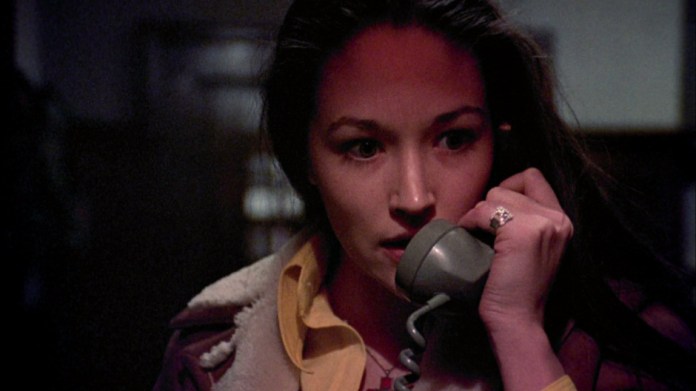
©Warner Bros.
So often we associate slasher films with the hailed trinity: Halloween, Friday the 13th, and Nightmare on Elm Street. Despite all being released over 30 years ago, these films have stood the test of time and continue to be heralded as classics. But why is that? After all, they’re not the first pieces of film to delve into the serial killer subgenre. Psycho—released in 1960—is an iconic case of slasher suspense, thanks in part to its infamous shower scene. The Texas Chainsaw Massacre from 1974 introduced the world to a chainsaw-wielding madman with gory effects. But what actually binds those three aforementioned films of the trinity are the genre tropes that they established: the superhuman serial killer stalks and kills a group of unsuspecting teenagers with the lone survivor often being the female heroine. Another reason why these films are so often well-regarded in the slasher genre is the fact that the serial killers themselves have adapted a legacy that’s bigger than the movies themselves. The masks and the get-ups that the killers don play a huge role in their notoriety; Michael Myers with his blank William Shatner mask, Jason with that hockey goalie mask, and Freddy Krueger with his smiley burnt face and razor-sharp claws. Black Christmas—the 1974 Canadian slasher (not the god-awful 2006 remake)—follows the same premise as the big three. But what separates this from the “holy trinity” is the fact that we never see the killer in the flesh. We only witness the buildup to the murders and a shot of the victims post-kill.
And that’s why we rarely include Black Christmas into the conversation of the best slasher films of all time—there’s no killer mask or costume to serve as a mascot. The masks/costumes of Michael, Jason, and Freddy give their respective movies legendary status, for the constant display of these killers’ physical characteristics and their association with horror give them a sense of immortality as they continue to permeate into future generations.
However, Black Christmas deserves to be included in the list because the film incorporates an everlasting sense of dread; we never know who the killer is, and why he’s doing the killing. If Rosemary’s Baby teaches us anything, it’s that less is more. Leaving us in the dark, the filmmakers make us feel as on-edge as the characters in the film. And by not giving us a rhyme or reason as to why things occur in the movie, the movie terrorizes the shit out of us in its ambivalence.
Being distributed in a Canadian market didn’t help the film’s cause, because it achieved a very limited release in the United States, and thus, its legacy is often overshadowed by future films released to a wider market in America. Therefore, audience members and critics alike often credit Halloween—released a half-decade after Black Christmas—as the inventor of the slasher genre tropes: the protagonist being the final girl, subjective POV shots, and a holiday setting. But you look at Black Christmas, and not only does the movie make use of these now-infamous conventions, but it seems to perfect them in a way that will forever influence the horror genre. Despite being an underrated entry into the slasher canon, the film has slowly garnered a cult following and is now deemed a classic—as it should.
From the get-go, Black Christmas sets the tone with an introduction that seems all-too familiar when viewed today. As the camera pans onto a sorority house amidst a snowy Christmas Eve, we hear a pair of feet crunch the snow beneath as the camera gets closer to the house—we’re in the killer’s POV. Now I call this familiar because Halloween is so often celebrated for its opening sequence, which involves its killer’s POV setting the stage for the events to come, and the influence is so apparent if you watch the movies back-to-back.
Anyway, the unseen and disoriented figure makes his way up into the attic of the house, all while we view silhouettes of the college girls through the windows. Meanwhile, inside the house, one of the girls—Jess (Olivia Hussey)—picks up a ringing phone. Describing the caller as “the moaner” to the other girls, she listens intently as a mentally disturbed man yells out obscenities and makes pig noises. When Barb (Margot Kidder) tries to foul-mouth the caller right back, a clear and well-intended voice responds, “I’m going to kill you,” and hangs up. When innocent Clare (Lynne Griffith) goes upstairs to pack for the holidays, the killer hides in her closet and suffocates her, wrapping her head in a dry cleaning bag and placing her body seated on a rocking chair up in the attic (the camera always cuts to Clare’s lifeless face throughout the film as if to remind the audience of the menacing presence that continues to lurk within the house). When Clare doesn’t show up at her school to be picked up by her father the morning after, he tries looking for her before going to the police with Jess and Barb and the house mother, Mrs. Mac (Marion Waldman).
As this mystery unravels, we learn more about the characters and the arcs that they inhabit. Jess, for example, finds out that she’s pregnant and informs her boyfriend, Peter (Keir Dullea), that she’s going to have an abortion; this makes him angry at her abrupt decision as evident by the piano that he childishly destroys later on. This display of neurotic emotion is enough to convince us that Peter could be a suspect, but director Bob Clark never goes down the route of revealing the killer because leaving the film the way it started—under a cloud of mystery—is far more effective and jarring than a formulaic storyline with a gratifying resolution.
Normally, I discuss the sequence of events from beginning to end in these reviews. However, Black Christmas is a unique case because it’s a deep-seated experience in masterful suspense; there’s one scene that has haunted me to this day thanks to the film’s utilization of claustrophobic camerawork. Black Christmas masters a constant lingering feeling of dread because its characters are filled with several motives, whereas films like Halloween and Friday the 13th provide only one motive for the characters: to overcome and beat the killer. In addition to the characters wanting to beat the killer, the characters in Black Christmas have motives of trying to identify who the killer is and the reason why he is doing this. We already know the answers to these questions in Halloween and Friday the 13th, so in a way, we are surrounded by a sense of clarity as we watch those movies. Black Christmas, on the other hand, completely leaves us in the dark, and that’s why it’s so disturbing as well as—to be quite frank—the superior slasher.
CONSENSUS: 3.5 out of 4 distracting Christmas carols
 Suntory Times